You are not logged in. You can log in or create an account to save favorites and join collections. more info
Embracing Stillness in Dynamic Interconnection

The talk explores the concept of "unthinking stillness" and "dynamic interconnection" as illustrated by the story of Yaoshan, a Zen ancestor, highlighting the notion of non-thinking during meditation. It discusses the duality of sitting still like a mountain versus the dynamic essence of life, suggesting that true stillness is a communal act involving all living beings. This stillness parallels the Zen practice of dropping clinging to life's aggregates, transitioning into a more interconnected existence.
Referenced Works and Concepts:
- Yaoshan's Story: A Zen ancestor narrative that demonstrates the idea of 'non-thinking' during meditation practice, symbolizing both immovability and dynamism.
- The Road Less Traveled by M. Scott Peck: Critiqued for its interpretation of Buddhist teachings; the book claims Buddhism states that life is inherently difficult, which is countered in the talk by emphasizing Buddha's teaching about clinging to life causing suffering.
- Buddha's Teaching on the Five Aggregates: Described as Buddha's insight into suffering, emphasizing that suffering arises from attachment to existence which comprises five aggregates.
- The Tea Ceremony Demonstration: A depiction of seamless practice reflecting Zen ideals where the act itself exemplifies complete presence and simplicity, drawing parallels to the practice of true stillness.
- Whooping Crane Story: Used as an analogy for Zen practice and dynamic engagement in life, where complete involvement leads to fulfilling fruition akin to profound stillness.
AI Suggested Title: Embracing Stillness in Dynamic Interconnection
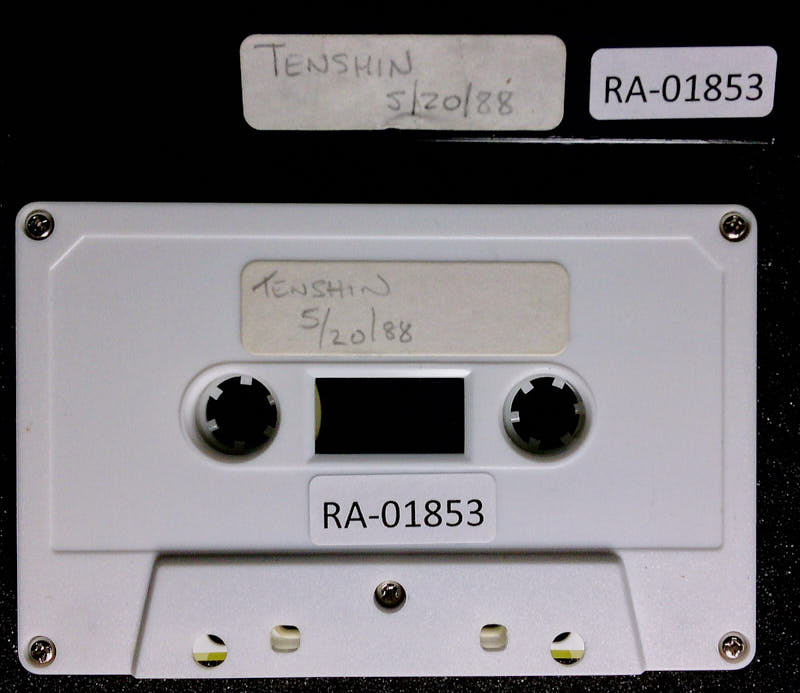
Speaker: Tenshin Reb Anderson
Additional text:
@AI-Vision_v003
Once, in China, in a town, a disciple of Buddha was sitting, his name was Yaoshan, that was his name, which means Medicine Mountain. Yaoshan is one of the ancestors of the lineage of this temple. He is 36th ancestor in a line of about 91 or 2 or 3. Now it's up to 92.
[01:02]
92 generations up to the present. And he was sitting. And a monk came up to him and said, what's it like? How is it for you? when you're sitting so still what kind of thinking is going on what kind of feelings do you have when you're sitting so still And Yao Shan said, I'm thinking of that which doesn't think.
[02:28]
And the monk said, I was thinking the unthinking and Yao Shan said non-thinking Within my play, kind of, what, a church game? I'll say something, and you say something, Dr. Port, is that okay? Sure.
[03:35]
Okay, so, I'm sorry. I'll say, I'll be the monk, and you be your shot, okay? You need medicine, and I'll. What's it like when you're sitting? I was so still. I had easier money. Okay, now you made a more problem in your shop. Come in. I was... [...]
[04:52]
What's it like when you're sitting so still? How is thinking of the unthinking? I mean, like... Thank you. The... the actual expression that the monk used was interested in one. He said that in Japanese, the Japanese translation of this is, in gozu gozu chi, in gozu gozu chi, in gozu is a Chinese character which is written, I'm going to write it backwards so you can see it, it's got a horizontal line which is drawn
[05:53]
Like that. And then another line coming down like this. This is a horizontal line. There's a line coming down like this, and a line coming down like this. This is like a horizontal line with two legs coming down. And the image is, you know, like this. But when a monk is sitting, or a person's sitting, holding up the heaven, like that. How about bald mountain? Gotsu, that's character Gotsu, which means, you know, stable like a mountain. Okay? And the monk says, Gotsu, Gotsu, and Gotsu, true Gotsu means it's even more stable. double moon, and xi means Earth.
[06:58]
So in this immovable, immovable Earth, in that kind of stillness, what kind of thinking is there? But added interest here for me in that expression is that gozu gozu also means wobble it like a drunk. So in one sense, the monk is asking, what's it like when you're sitting really still? But in another sense, what he's asking is, what's it like when you're sitting in the actual dynamic of life, which is sitting like an immovable mountain and also very wobbly?
[08:16]
The city that this Medicine Mountain was doing was, in one sense, immovable, but in another sense, it's fragile and fleeting and dependent on many things. This stick is a symbol of right speech. It's also a symbol of Buddha's tongue. Or the other way, Buddha's tongue. So Buddha's tongue speaks the truth.
[09:31]
And when I hold it up in my hands, in one sense, I try to hold it still. If I don't try to hold it still, if it wobbles through, I think the reason why it wobbles is because I'm not really trying to hold it still. But if I try to hold it still myself, I see that it never is still. Right now, shaking like a leaf in the wind. Can you see it? All living beings in the world, all living beings in the world, are holding this up. I can't hold it still by myself.
[10:50]
If this ever holds still, it's the stillness that all living beings hold it in. And the Buddha's right speech is not something that Buddha does. But Buddha sits up there and speaks the truth. The truth that Buddha speaks is a truth that all of us let Buddha speak. The stillness that we sit in is the stillness that all living beings create together. Sitting in that stillness, that stillness is real stillness.
[11:57]
That is a stillness that I, as an individual person, or you as an individual person, cannot do. Sitting in that stillness, Yaoshan said, there, in that stillness, sitting that way, is thinking of that. which doesn't sink. So, you sit down and... Is that okay to sit on the floor like that? You can sit on here if you want. softer to the cushion. If I sit, I don't know, maybe I can sit pretty still.
[13:06]
Really, I mean, really I'm moving. A lot of slowing through me. Things are gurgling around in my intestines. A lot of things are growing and dying. It's actually a very dynamic situation. There's a cartoonist who draws pictures for the New Yorker named Booth, I think. And one of his cartoons, the man sitting in a bathtub singing, rubbing his back, and he said, I'm like a duck in a pond.
[14:15]
On the surface, serene and placid. Under the surface, My feet are paddling like hell. I once met a, uh, a key teacher of the, uh, Borasenke School. I met a teacher of the Urasenke school. Palms up the Omotesenke school. Urasenke means front door, I think. Omotesenke means back door. Is that right? Reverts. Reverts. And he was like number two or number three in the whole school.
[15:22]
He was 78 years old at that time, about 10 years ago. And he came and he was going to give a tea class, tea students and tea teachers. He came in and I was immediately, favorably impressed. Very impressive. Very calm, lovely creature. And he taught the tea class. Various tea teachers came up and did their did their various tea ceremonies and usually somewhat esoteric aspects of tea ceremony. He would make comments and teach them various things. At the end, there was some mix-up in his schedule. So people said, why don't you do tea? And so he did tea, and he did the simplest, most basic form of tea. You know, he showed the most basic thing.
[16:24]
And he did it in such a way that I would say, I would actually, I would say now, but also I would quote my tea teacher who said, when he did it, he was just tea. I mean, there was nothing there anyway but tea. He didn't even look good. It wasn't like, wow, do you see the way he did it? It was just tea being made. There was no brilliance. Of course, he did it correctly. He didn't make anything to fix. But the impressive thing about him was that there was nothing to keep. He had a wife who was there with it. And she was running all over the place, making it possible. Him being just tea. She was tea teacher too, but he was not just tea.
[17:37]
She was doing various kinds of arrangements to make possible just tea. Still, I'm not saying we shouldn't try to sit still. We should sit still. But that stillness which I can do. That stillness which you can do, which is sometimes pretty still and pretty nice. That's not the complete stillness. The complete stillness is the stillness which is actually made possible, brought to you by everything. That's there too. That's where Buddha sits. And that's sitting. He is thinking of that which does he think. It's not like the person sitting there and sitting there in the dynamic sitting, the truly profound sitting, which no one person can do.
[18:42]
Not even Buddha can do it. But the sitting that all living beings make possible. In other words, the actual sitting. Just like... When I hold the stick up from a distance, you may think it's still. But up close, it's much more dynamic than that. It's much more vital than that. It's actually what's happening. And that is viewed very well. Sitting in that place is not like this stick is thinking of the young people, but this stick is thinking of something else. This stick is that which we call thinking of the unthinking. And sitting still in the true stillness, the stillness which no one person can do, that sitting, it's not like you're sitting in there and you're thinking of something in addition to that sitting.
[19:44]
That sitting still is the thinking of the unthinking. And there actually is thinking. But the thinking is exactly the sitting still, the actual sitting still. And then the monk said, how is thinking of . And medicine monk, he said, non-thinking.
[20:49]
Another one of our ancestors commenting on this story said that when the monk said, how is thinking of the on-thinking, that that is the answer. That is an explanation, that is further instruction. in thinking of beyond thinking. In other words, thinking of beyond thinking is how. And how is also instruction in true sitting still. How is also instruction in speaking the truth. I don't have a truth before I meet another person. The truth is something that, again, comes up on that occasion in the complexity of the meeting.
[21:51]
I can't decide where I just stop her mouth. There's something else I want to talk about. Are you filled to the brim now? Quiet. Let's sit a little longer, and if anybody wants to say more, let me know. Okay, Della.
[23:50]
There was... There was a... There is a book out now, and it's called... a load, a load, a load, a load less rapid. You know, it's called a road less travel, I think. And it's, I think, been on the bestseller list for 299 weeks or something. And Just for the fun of it, lately I've manifested the form of a crusader or an underdog or something like that.
[24:50]
Because this guy's got this bestseller out there. He's saying, he's putting out a certain truth about Buddhism on the first page of his book. And I have a different version. But here I am squeaking this little voice here. He's got these millions of copies out there saying it's something different. So what he says, at the beginning of the book, he says, life, I think he says, life's difficult or something like that. Well, that's true. But then he goes a little further and he says that this is something that's, you know, been said by Buddha, too. And then he has a little footnote and says, Buddha said life is suffering. But that was the first truth of Buddha. But Buddha didn't actually, as far as I know, say that. Of course, he didn't say it in English, but he didn't say it.
[25:51]
What he said was in Sanskrit. He didn't say it in Sanskrit either, but what his statement is translated as into Sanskrit is that what he said was... Something like Upadana conscious skanda dukkha. The five aggregates of existence is frustration and suffering. The five aggregates of our existence When we cling to them, this is a definition of suffering and frustration. So Buddha's teaching is that, and then he explained that there's a way to drop this cling right while you have an existence, which has these five components.
[26:57]
There's a way to stop the cling, or to, even when clinging, to let To let go. And when you let go of that stuff and just let it be, also the suffering drops away. So life itself is not necessarily suffering if you don't cling to it. As a matter of fact, whether you cling to it or not, it's just life. But if you cling to it, you get an extra bonus called misery. So life is this thing that's completely sitting still and wobbling at the same time. Life is this dynamic, ungraspable, totally event that everybody's included in and nobody can be outside to play with it. Everybody's in the wash. Everybody's churning around in this fantastically white situation.
[28:01]
And if you try to hold on to it, you get an extra kick called suffering. That's what Buddha said. So if you want to get rid of that extra kick, then all you got to do is stop cleaning. The instruction I just gave it before, the story about sitting still is an example of a practice in, there you go. of the external. So again, try to sit still. You know, when your city's still, that's your life. You try to hold onto the city still, can you get in there and hold onto the city still? You grasp the city still, you'll be frustrated. If I try to hold this stick still,
[29:03]
I will use the stick or stick. But I join the way the stick actually is, which is the stick, the way the stick is made by all of us together, and just let it vibrate. As it vibrates, and let my body, and let your body vibrate. as it vibrates. Vibrates, be impermanent, be conditioned by everything. Then these little clings, grievously drop away. I mention that because in the process of going from holding sticks by yourself to letting
[30:04]
to join in all beings holding sticks. The transition from there is sort of sad. It's not suffering unless you cling to the sadness. But there isn't a lot of pain in the transition from me holding sticks to joining a world where everybody holds a stick. There's some pain in the transition, or some grieving, the transition from me sitting still, from the sitting still that I can do. Not really sitting still, but from the sitting still to the extent that I can do it, the sitting still that I can be proud. And I can be pretty proud in my sitting still. Sometimes I sit pretty still. Going from that proud sitting still, giving up my pride, and going to a sitting still, which is really sitting still, which is the big stillness. That everybody joins in, and everybody thinks possible, and me no more than anybody else.
[31:10]
Joining that big bit sitting is worth what it sits. But moving from my little manipulated stillness over to this one, there's some grieving there. That grieving, again, is not frustration and misery. It's just a natural grieving. from giving up an old and unnecessary pal. It's like, I'm very sorry to lose my 5,000-pound teddy bear that I've been carrying on my shoulders. It's sad. Even though it's bending me over and torturing me, still, when I put it aside and I feel relieved, I'm still sad to see the poor guy or girl. And the teddy bear is not really anything other than my pride. My pride that I could sit or I could hold a stick up or I could speak Buddhist truth or I could understand or I could help.
[32:22]
Moving from the I can help because I join all beings in helping. Moving from that I could open my little heart to the reality of my heart gets opened by everybody and everything. Moving from that little reality to the big one, there's some sadness. And again, If in the process of moving, you try to control that, there'll be misery around the sadness. Some people try to control the amount of grief that they go through in the transition. There are two aspects to Zen.
[33:31]
One is called sitting. Sitting still, which I've been talking about today. That's one aspect. Sitting still, okay? And at the beginning, they tricked you and they told you the sitting still that Zen is the sitting still you can do. Because almost no one would dare try to do the big sitting still right off. Because that put the teddy bear down immediately. You have to put your pride aside right away. That's too much to ask. And some of you maybe just come here today, so I'm sorry. So you practice with some pride maybe for a while. Well, I can sit still now for 40 minutes, pretty good, or 20 minutes, or 10 seconds, or whatever. And eventually, anyway, as you get stronger and stronger, you may develop to have enough pride so that you can face the fact that you can't do it. And then you start sitting still.
[34:37]
So that's one aspect of Zen practice, sitting still, this true sitting still, which is the same as thinking of that which doesn't think, which is the same as howl. Howl is called howl's sitting, or the sitting of howl. The other aspect of Zen practice is to go to teacher and ask about the dharma. In other words, act out this dynamic sitting. Act out the dynamic stillness in a relationship. This is the sitting and all living beings are the same. This is the sitting still you do if you doing it with acidic for everybody, can you act that out with another person or another living being?
[35:39]
That's the other aspect. To get it outside and do it times two and then keep going. There are many examples of just getting it outside. Actually, the story I started with is an example of a monk in Yao Shan. The story between them is a saying of the story that you can act in your own certain skill. The story between them is also, that story is a story about sitting still. And what they were doing with each other is demonstrating what we mean by sitting still. Sitting still includes all this chatter that we do with each other.
[36:43]
Sitting still includes all the stuff we're doing together. That's sitting still. You see how still sitting still is? You see how nothing that happens between us will disturb it? Once there was a whooping crane. This whooping crane, a female whooping crane, was born in, I believe, Austin, Texas, in a zoo. And her keeper was a male homo sapien. You know how homo sapien is that? That's what we're trying to find out. And when she was born, the first thing she saw was this male homo sapien, and she imprinted on him.
[37:49]
In other words, she'd gone low. She thought he and she were the story of life, of a whooping crane. So she grew up and the zookeeper tried to, whooping cranes, by the way, are an endangered species. Part of it because they fall in love with other species. This makes it much more complicated. The same thing happens in different kinds of Buddhists. Some Zen Buddhists are falling in love with people from other schools. That seems very complicated. So anyway, when she grew up and became a mature female whooping crane, they tried to make her with male whooping cranes, but she wasn't interested in whooping cranes. She only liked men. So anyway, that was the problem.
[38:58]
Meanwhile, up in Wisconsin, there was another male homo sapien who was also interested in raising or propagating whooping crannies. And somehow the zookeeper and he got in touch and the female whooping crannies was sent up to Wisconsin. And the guy up there named her Tex. And it turns out that Duna Whooping Cranes, maybe quite a few other birds, maybe most birds, I don't know. The egg will not descend until she dances.
[40:03]
And she won't dance unless the male dances. So this man studied and found out about how male whooping craze dance. And he got dressed up as a male whooping craze. And he danced. And he danced, and he danced. And finally, Tex got up and danced. And because she danced, it came down, and then she was artificially disseminated with regular male whooping crane seminal fluid. It took.
[41:06]
However, in a sense, being a single parent and living in captivity with all those stresses that single parents in captivity were subject to, nervousness and pressures of all these things. The egg came down, but the shell was too thin and the baby didn't survive. And this man went through the same process three years in a row. And each year, something went wrong. Each year, a text got up and danced, and the head came down, but something went wrong, and the baby didn't live. And then the... Fourth year, he was too busy to spend the time out courting Tex, and so he skipped the year, and then the next year he decided that this year he was going to really put polarity into his relationship with Tex.
[42:22]
He wasn't just going to do the dance and then split. So... This time, he went through the same courting process, but then after they created the fertilized egg, he moved in chicks. He built a little house where they both could live, with straw where she could sleep, and he slept next to her. And he slept less than she did, so he was a writer, he had his typewriter there in the little house, And when she was sleeping, he would do his writing. And when she went out for me for food, he went with it. He did everything with it. And this additional participation, this additional effort, allowed the process to go to completion and make a strong egg and everything.
[43:34]
She related the egg as necessary, and it worked out when baby was born. So you see I'm making the proposal that this is sitting still. that this is what it means by sitting still. Also what it means by sitting still is sitting with your legs crossed and entering the stillness of all living beings. But also when you get up and move around the world, sitting still is like that, I would say. That total engagement, total generosity Total patience.
[44:35]
Total concentration. Total honesty and ethical straightforwardness. And insight and wisdom and compassion are all there. And that's what we do by sitting still. When we're sitting alone, all those things are happening with you. And when you go out, among other living beings, This is also an example of what we mean by life when you're not clinging to it. It's not easy to do this because, you know, you've got to keep putting down all these huge teddy bears. You have to keep putting aside all these things which you have become accustomed to but don't need, as a matter of fact, are bending you out of shape and not letting you get up and dance.
[45:43]
But it's funny, you know, for a grown homo sapien to get up and dance in front of a whooping train. But that's what she needed. That's what he needed. Before he danced, I bet he felt sort of some reservation about it, I would guess. But when he actually got into us, I bet he felt good. And when she got up, imagine how he felt. And what I would say is that This is not a very good thing to say, but I would say that sitting still is that much fun. It's as much fun as mating with other species, not to mention your own.
[46:53]
And some people think it's even more fun than mating. But anyway, they're both sort of, for what I would say, they're either They're both sort of like the two most fun things that living beings can do. And they both have to do with reproduction, with giving rise to the next birth, the next generation. The next generation of flesh or the next generation of happiness and freedom. and shakeness with all living beings. But who wants to be shaky all the time? That's the answer. Who does? Who you really are, or the really that's your who, is willing to be still, be shaky. The Buddha is actually kind of nervous, kind of shaken.
[48:02]
Buddha's so free that Buddhists are willing to be kind of stupid. I don't have, I don't even have enough of it. And Yao Chang said, you're too brilliant. And Bai Yan said, what about you? And Yao Chang said, I learned the law. Ungainly, in a hundred ways. Awkward, in a thousand. Chill, I go on like this. This is the skill of the ocean. This is not clean to self. This is doing many advances.
[49:14]
with whooping trains. Or at least the Yaoshan style of practice. You don't have to practice that way. Just like you don't have to be a whooping train. Each of us have our own way. You know, when Bai Yan said, I don't even have nothing. Did you feel how neat that was? Wasn't that nice? But a little bit too brilliant, maybe. A little bit too brilliant. A little bit too much like holding a stick still, all by yourself. But Yao Shan, Yao Shan's a little bit limping, a little bit limping because This body, if it's done by all living beings, is not going to walk the way I want it to.
[50:20]
It's going to limp. It's going to be a little awkward. When you first start doing a mating dance, if you're going to do it with a whooping friend, probably you don't know how so well. You're going to be awkward. When you first start sitting still, as Buddha sits still, you're going to be awkward. You're not used to that. You haven't been doing Buddhist sitting in a little while. You can't remember, but you're Buddha. So it's kind of a little shaky at first. And at second, and at third, it's always going to be shaking because it's always a new dance. So, this is how a student. It's not exactly, this is how to think, or this is how to sit.
[51:22]
It's a little bit too much to the finishing at all. It's rather, this is how to sit. Right now, the sitting you're doing, the breathing you're doing, the thinking you're doing, this is how's life. Please do everybody a big favor. Please do everybody a big kindness and keep Hao alive. Please keep Yao Shan's Hao alive. Good day, Lord.
[52:32]
Thank you.
[52:33]
@Transcribed_UNK
@Text_v005
@Score_83.61