You are not logged in. You can log in or create an account to save favorites and join collections. more info
Living Lessons in Zen Connection

The talk explores the profound impact of seemingly simple interactions and experiences in personal growth and Zen practice. It emphasizes the importance of genuine, direct communication over theoretical or contrived exchanges, suggesting that lived experiences and personal interactions often impart more significant lessons than formal teachings. The discussion also touches on Buddhist philosophy, highlighting that its teachings primarily guide on how to live, noting that realizing and honoring one's pain is crucial in forming deep connections.
Referenced Works:
- The Zen Teachings: The discourse refers to teachings that emphasize practice as a lived experience rather than a purely intellectual pursuit, underscoring practical guidance for living.
- Story of Buddha and Mahakashyapa: Mentioned as an illustration of transmitting wisdom beyond words—through direct experience and presence.
- Buddhist Philosophy Texts: These are noted to emphasize practical living advice rather than purely theoretical understanding, reflecting a foundational principle in Zen thought.
AI Suggested Title: "Living Lessons in Zen Connection"
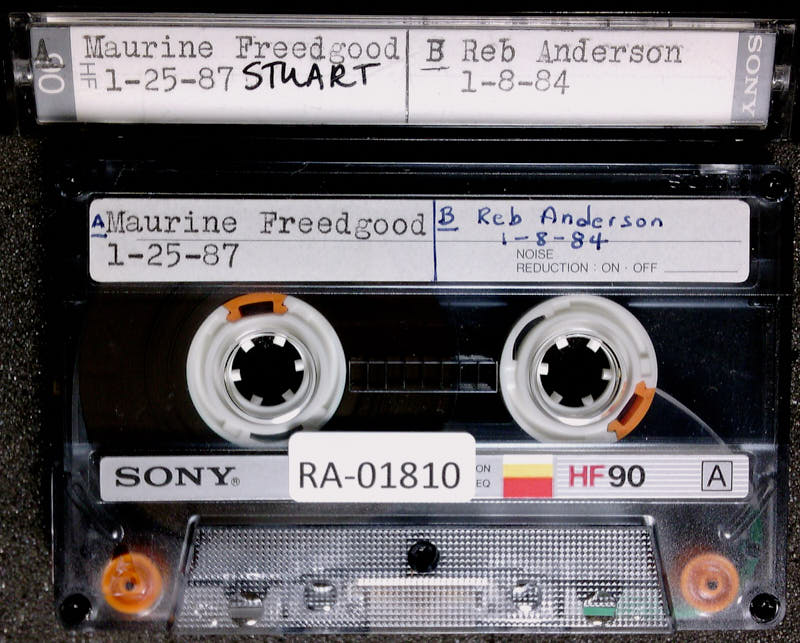
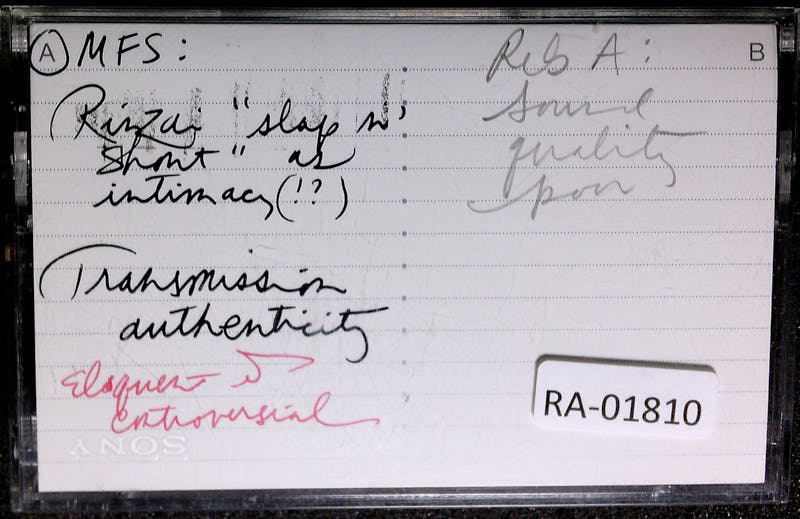
Audio file has wrong year
You wanted advice for me, Greg. Sorry, Greg. I told him, Paul, and I'm in a friend, or in his name, or in you, or I'll talk to you. I'm really a student at them before, but particularly, this morning, it's a book that is yet. But I'm bringing it up this morning. It's one of the things that in my life, I think it's happened to me that I keep popping up again and again. In various contexts. And showing it behind a new aspect. A new aspect.
[01:04]
A simple concrete experience that impressed me, like Frank, impressed me, has become, at least, you might practice 10, 12, 14 years after it happened. And some of you referred to 34, so you may be able to remember the contact that I brought up in another time and see that in the research at that point. The story that I'm thinking of, it is, again, it's a great story. It took place in an airplane. It took place in March 1971. I was flying through it. Portland organs with the cellular.
[02:08]
They're going to leave three power. It stops. And then we're going to see a picture. It might cost me a lot of energy. So I clearly have to be took off, and that was just us. And we said, I'm going to teach you how to count. I'll teach you in Japanese. One-third thingy. So you can be put on it. You can be put on it. You can be put on it. And guess what?
[03:33]
So he said that to me. So I said, the first time I could do it. I went through a few times before I could go. And then he went to school. [...] So I started again.
[04:36]
And I stopped. And I didn't stop. So I started again. And I didn't stop him. So it took time in my life. I kept saying, And what I mentioned before, at that time when we were When he was doing it, I thought to myself, I don't have as great as faith as I can, but I was about 23 years old.
[05:45]
I was 25, 26. And I was in my days and months. I've been in college since mid-year. and so I had some ideas about what a Zen teacher was like. So I was amazed that there I was, the outstanding teacher who was attending this time. Teaching me to come through to a team, I'd like to have a voice to come. It's just amazing, it's really doing that. Why would the Zen teaching become powerful? But today I'd like to, the thing I'd like to say is the day of the currency
[07:04]
say about with me last. And if you tell by the story, the topic was so good that there was a possibility that for real communication, very, very difficult. I said it. But the real communication was not the real communication, but the facial communication was. He wanted me to say that all over the portal. And I got it. I got it. In other words, the thing I see about it is that on that occasion it is more important to students to communicate than what to initiate something you need for progress.
[08:11]
And to find myself sometimes if I'm in a talk or in a class or something, or one-to-one discussion, I sometimes think, oh, to be good, today is something good. That's what you say. But what I sometimes did when I think of some of these poliophilic questions kind of thing is that we can evade something very spout, but it doesn't go anywhere. And my feeling about computer work is what you would rather communicate with me. I'm on a very low level. Low level, but at a very primitive and simple level.
[09:12]
We prefer to communicate. They're not just communicate, and they're very highly. And sometimes I talk to people on a very highly level, and they just communicate. And sometimes people talk to me, and they say they're highly. I don't know what they're talking about. I can tell it through this. I can tell it would be wonderful if they knew what they're talking about. But in fact, I don't know what they're talking about. And while I'm talking to you, I'm wondering what I'm saying is so brilliant that you're talking about. When I told that story, I thought that it seemed to me. Now my son, in fact, you've already been talking to me. In fact, I think I brought me into close pockets of this simple concrete necklace.
[10:25]
Buddhism is not a straight philosophy. However, in Buddhist philosophy, most of it, you can see quite quickly. Most of Buddhism is actually talking about how to live. It's actually We did some guidance on how to live our lives. In some good spots, it looks like it was purely mental, intellectual activity. Even that, if you look at it closely, it's really pointing on how to live. And while I'm talking to you now, now that I've been talking, I want you But this was something you're talking about with me.
[11:36]
This is what I've said so far, something like Nintendo 3, Nintendo 3, a touchless filter. On, on, man. I mean, it's kind of difficult situations in this life.
[12:39]
But I'm saying, today I'd rather do something that made up with you. Even though it's not that interesting. It's something that's very interesting to me. It's interesting. I can't believe it's difficult. Well, I thought it could mean I thought about that. Somebody told me a type of horror
[14:06]
It was trying to help me. Look at my heavens there. And in Hebrew, a big temple, said temple in the past, tell the monks that I not change against the grave. I forget. You really cannot change against the grave. You really cannot change against the grave. You have to have even spoken. You just need a mirror about the It looks tiny, though. We found these, uh, uh, oriental heads, you know, like, black heads, long, black. And the middle of black there, tickle out there. When you cut it, you look tiny, but it's often a balloon. It's a tiny thing, though. It's just big, I'll do it. And I said to the guy who told me, and I said, are you telling me that because of blackness?
[15:20]
And he said, yeah. I thought, well, I need a thing, because they need to try to write down like this. And he said, yeah. He said, I need a thing, because this is cool. It's quite a long time ago. I didn't know. It's actually more. He said, oh, I need a thing. I hadn't been sure. He said, but tiny. You know why I think they have to remove it? That we don't have to share with you today? Because they teach it. Well, it's a really nice. But then I thought to myself, I said to him, I know why.
[16:25]
I said, you know why I have to throw it to you? You know what? In other words, the connection between dreams... In other words, the connection between dreams... I had one way to do this, but... Now I'd like to get close talking to him.
[17:32]
And see if he could do that in this. How can I get close talking to him in a way he's not so... Well, the other day, a couple of days ago, I was looking at the word ridiculous. One word, I looked at this. I looked at the word. Planner. Planner had to do, uh, from Latin, for, into something like, sandaloo. And, in other words, Planner had something to do with, with the payment for us. community of the people. And in this book, in this book, particularly in the paper that was kind of hallucinating about what predicates, what predicates, you got four times, five times, five times in ways we predicate the community.
[18:54]
You can't put it in the category. So we say, for some things that I don't know, I'm not going to do it, [...] I'm not
[19:59]
But I'm your estimation. To say that it's a good hand of knowledge is granted by condemnation. And to say neither of good people are wrong with you. It's granted by . Even the four basic women in extremism, So what we're trying to do is to meet things as our life. It means to meet things without sort of things. We can't do it.
[21:00]
We can't do it. [...] We developed some kind of practice or team being related with ourselves and others by putting our differentiator in place to look like our things we can do. That's what we thought about. That's what we thought about philosophy intended for you to work. Our thumb went back to me then okay?
[22:42]
And I might tell you too, but if I tell you too, sometimes I want to tell you too many people out and tell me these things. And later they tell me, so I'll tell people a lot of time. You can then have to lecture, they have to say, oh, not only that, depending on that type of stuff, but kind of imperative. But I don't tell you these people out and tell me these things. And this person said, in my relationship with you, I want to honor part of me that you speak. He said, you know, honor the people, honor the students. Well, I'm very excited to honor of the pain. It's possible to have shame and not say anything about it, but it may be that the reason why I don't say anything about it is not because I don't honor it enough, I want to put it aside.
[24:06]
And I know if I have pain and I like to put that pain in me, if you bring that pain up, But she'd brother like that pig. She felt in them so I could get through. She would tell me that you couldn't. But sometimes she had not told me. She had not thought up to me. She had not tried it out. And now she feels that she left her cell. and all those things present. But to not bring anything up is not to honor anything. I was very experienced that not honoring these dreams, neither that you had a home or a relationship. Not honoring that thing is the kind of sickness.
[25:12]
But the sickness is provided by a system that And if you know that you bring up, if you honor you, you know, if you know that you bring that up, and it's the face of course for them, well you may not want, you may feel that I found a person that was going to walk away to me. And now that was a person that we dreamed, made them retaliate, and so don't be somebody trying to stalk it, only. She feels that to go necessary, the word is very funny. She said that they honored the word theory, that we have to do it, even though just to be a certain other circuit, even though
[26:14]
If you have a question, you will put it back. If you're honoring your name, you can't be sure. I didn't know you'd have an experience in the day of doing it, but the prince, please, please. And if I think about it, I think that he, in his own way, has come upon a kind of new way. We know the way it's too. About medication on the start to do the cooking. In the modern version, medication on the start to cook. It means rice, because it's alive. So, that's the thing. It's always the thing. In conjunction with this high bottom, I admit that there's a wonderful mist, the mist of Geralt and Puff.
[27:33]
And in that mist, you see, you can just look at a little bit of that mist. But there was just a very warm, when you fight, and that it isn't hurt. The real good job was to do. They deemed to be living under. And our temple, all of the Greece, dedicated to the work of a student, a group of people. But through the time of the period of biking, people who worked at biking, one of them who worked and they weren't going to be in town. And they weren't going to. from going to fight, so Venus wanted to fight the law. So she sent her son, Eric, to kill, and if it could kill, uh, but when he talked about it, he caused the feeling of death.
[28:36]
He manifested his death. And he got nuts. But to marry her in the dark, Because she didn't want to know who was born. Or she might go out and his mother would find out who was born. So he took her off and took her out. She did that. And the only matter in the start was to get her. Is to get her. Is to get her. And she was born again. And he was born again. And he was born again. And he was born again. But then. For sisters, like you said, kids, the courage to find out. You know, I did not do it. You know, I did not do it. You know, I did not do it. [...]
[29:38]
I did not do it. [...] I did You know, if you put the white girl in, then the one you saw, what you saw, and you were so shocked. But how beautiful the brother was. But that's his final day, he just picked himself in one of his head. You were born in his bed, but he's still boiling it. But then he said, oh, But some things they changed. We were finished. [...]
[30:39]
We were finished. [...] It's very, very unusual, but all things lost and broken. The one thing I'm pointing up now is to ask me if that's the 30th, and the 30th of it, we'll sit apart and go back again. A lot of work to get back together. So if it's to honor our pain, it's coming to the question. The family has a relationship like that. There will be a final pain in it. It will fall. And when you saw too hard injury, brother, they stuck with it.
[31:44]
They run away and out of it too. And a lot of it just happened yet. But when you get back together and get back together, if you lose the relationship, Honestly, I'm pretty good. It's not good. It's, to extent, that she's going to hire and hire and love and put in other than two people. And so, you know, he's just speaking loud. He has to be distracted to be like an energy for 50 years. 50 years, but ... [...]
[32:51]
The other thing about this show is, you must be, [...] you must be. So we have part of our, part of our titan, engineering the white, engineering the next thing. We, we, [...]
[34:00]
And whenever we try to solve those things, like the laws, being white, they always get good, [...] good where, uh, there were 49 men there on the street last, and, uh, they're looking down at this island, and Putin comes over, and says, uh, what are you looking for? And I'm just, uh, you know what? Is it because we're losing him? And he said, no, we're walking up the street. And he thought, his wife's out of here. So, in our questions I see, and I think also in G6 too, because everybody wants to get clear.
[35:23]
Everybody wants to get cleared up and know what's going on. Since it's not bad, you get to wait until you want to find out. We wanted to get things into the realm of identity context. We took out this, and this. We want to get new realm of identity. That's correct, and a problem. It will be within the older self in the fight. That was obvious. I'm letting you know, I'm indulging myself in the light, and if I'm in the light, then right in the light, there's stuff. I think that goes off a little bit. If you fly after my 10 hours of the light, get things to melt in. And that's a problem. I know I know. When I go for the light, the darkness is grateful.
[36:24]
And if you think you're just going to the light, it's going to be all this. You're not the part of the wall. And you're gonna stand up. You're gonna touch the part of the wall. And if you go for the light and know that that's just part of the world, then know the darkness is right around you. You get ready? Take it out. Slowly say, you're getting home better. Light in light, but it's dark, but don't try to see yourself. And right in the darkness, there's light. Right in the darkness, there's light, but don't try to compromise the light. Light in the darkness, most of the parents don't like, but don't try to feel it. And because you try to feel it, you just go to the most part, funny, funny stuff.
[37:31]
But it's okay, because again, the more time you go around, the more you... So if we have three... I was talking to a pregnant lady two days ago. And he was talking about how William, with Chet, he had him on the baby a while ago. And with Chet, he was getting a knuckleball on. The third day, he started doing a couple of things that he liked to do with that. He liked to go up. He was just trying to be doing it to go up to the gym. And he was saying, you know, when the baby comes,
[38:36]
That's when people actually know you can do that. You just don't do that business. So, one of my third response, one of my third response was about the issue. It's kind of fun. It was kind of a lot of response from the wife. Well, you think it's a bunch of the health care industry. You can run in. And then you can go to a park. Well, I told you that's probably. I never know what people know where you have to go to. They're real. They're found. It's really useful to say. The farm is going to be in the table. You know, it's real. But that's it. But it is really cool. In many cases, I'm not a problem in itself. It's only a probably when you want to do something with the syrups with the pot and it's failing to bond with you outside with the tires so hot with the popcorn and then that's in So I thought, well, I'll find a thing that's like you told me
[40:06]
The only happiness. Honor the pain to arrive at this romantic connection. The one who brought heart into the perfect heart of the world is a big gift. In this period, we put on the pain to do another. It was so honor the pain to arrive at this moment. ... to go on... ... then... ... to make... ... it that... ... honor... ... honor... ... to honor... ... to honor... So it's very transparent.
[41:09]
You have to insult. I have to respond. What could be useful for us not to do? Only I know what we truly respect are. Only we know. And I want to tell you that we are doing respect. We have to look to respond. I mean, people can't tell you. But we have to thank God for yourself when you are. One of the things that I would suggest to look for is how quickly you can do it. So, one of the things about who didn't do it, the idea that when someone comes to loading, you take low time, like that. So one of the same things in the story is dialogue between Buddha's first disciple and Buddha's second Mahakashita, the Buddha's first disciple in Raya.
[42:21]
He won't have to add it on the other day. On the other day, Buddha used, but he didn't die in his voice. He could transmit the dharma through the nameless. He could transmit the dharma through the nameless. He could transmit the dharma through the nameless. He could transmit the dharma through Mahakashita, and Mahakashita could transmit it through the nameless. So the story about the transition is down between . [...] We'll pull the, uh, flag. Yeah. We'll connect it. So put the flag up. Yes.
[43:24]
Upside of, uh, through the Temple B7. We're late, flying. On special occasions, uh, we invite you to move to this flag. Hey, what is the end? What is it? Yeah. Oh, that's why. It's already happened. That's why it's a new thing, yeah. That's what I call it. That's how, that's one of the way when you look at it, you want it to light it with. When you look at it, when you look at it, when you look at the dream, you look at the end of the dream, I went away on a retreat and what the problem was. That's the honor that we did this. The hardest thing, when he first wrote, when he recognized [...] when he first wrote.
[44:40]
It's an experience that many of us have. It's an honor to recognize the thing you have in your body. First of all, you can get out and let the ship have. But you can let it run along for a while. You can know that it's an honor. And finally, it just comes to us. It's not the actual thing. It's not the only thing you have. So I like the question. It's not so bad. And dog, in front of the office, dog is out of this place. I don't think they can get me.
[45:44]
One time I was going to the doctor's office. The doctor said you're running from my tap and walk away. Way far away, I was only talking about that. It's amazing how somebody I'm talking about. It's amazing how somebody I'm talking about. Then my sister got a dog. It's about to use the big dog. And we got to go talk to you.
[46:47]
And we got to go talk to you up. And I was up with the pup. So, finally, there was this cue. And they opened up in the kitchen's house. She was cute. And he had a lot of that. You know, sometimes my friends would come to the house. My friends didn't want to pray at all. They'd come to the house. They didn't want to pray at all. What I was going to say. Because I was there. I knew that. I knew how to say. You know. But if I hadn't grown up with that thought, I'd still get there. There was something about growing up. If you thought of your thing. From the time of the talk. We can live with it. We can live with it.
[47:49]
We can live with it. [...] It's still tape. It doesn't go away. We can live with it. We can live with it.
[48:01]
@Transcribed_UNK
@Text_v005
@Score_13.59